Loading
Loading games and devlog…
Loading games and devlog…
Ah yes, why do people in this room speak different languages?
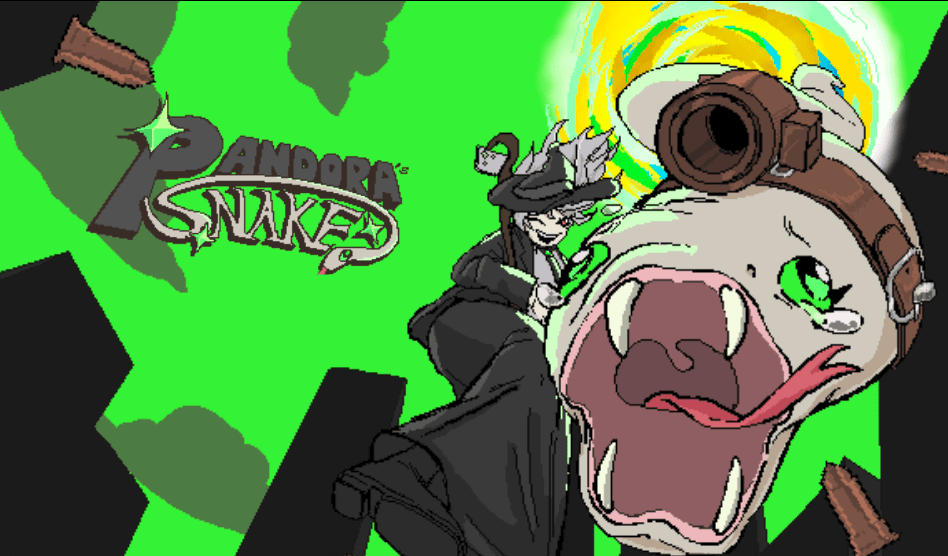
Pandora's Snake started as our entry for GAMESEED 2026, which came with three main themes. We picked "So Absurd, It's Cool" and decided to take it a little too seriously.
The result? A reckless witch streamer riding Jormungandr, the legendary World Serpent, with a machine gun strapped to his back. Together, they travel across the multiverse, destroying cities, entertaining viewers, eating whatever gets in their way, and chasing someone named Sage for revenge.
Gameplay-wise, we took inspiration from the classic Snake formula and mixed it with an open-world destruction experience. Destroy buildings, eat people and consumables, grow longer, gain subscribers, pick upgrades, and eventually face the final boss. The more chaos you create, the more attention you attract. And apparently, the internet loves watching destruction.
But honestly, the most interesting part of this project wasn't the absurdity of the game itself.
It was the team.
After several projects, I started questioning whether my workflow was actually good or whether it was simply overfitted to the people I had been working with. A system that works with one group doesn't necessarily mean it can work with another.
So this time, I decided to experiment.
Almost 60% of the team came from outside our usual Gamejam Hunter circle. I also changed our workflow from a Google Docs-based system to a Miro Kanban board. I wanted to see whether the system could survive a different group of people, different habits, and different working environments.
And surprisingly, it worked better than I expected.
One of the biggest problems in previous projects was that I often became the Single Source of Failure. If I was unavailable, progress could slow down significantly. This time, recruiting people from different campuses and backgrounds helped reduce that risk.
Since their schedules and circumstances weren't identical, there was usually someone who could keep their division moving even when another member was unavailable. Even when I barely showed up because of my own university final exams, the project could still make progress.
For once, I wasn't required to be everywhere.
And that was a pretty good feeling.
However, solving one problem introduced another.
Almost everyone already knew what they were supposed to do. We weren't dealing with complete beginners anymore. People understood their responsibilities and could work independently.
But somehow, they all spoke different languages.
Not literally, of course. The problem was how they organized their files, named their scripts, and structured their work. Everyone had their own assumptions about where things should go and how things should be written.
A file might make perfect sense to the person who created it, but become a small archaeological expedition for someone else trying to understand it.
Some people prioritized their own habits over the readability of the project as a whole.
And that's when I realized something important.
I had spent so much time building a workflow that allowed people to work independently that I forgot one essential part: making sure their work could actually connect.
STANDARDIZATION.
A team doesn't just need people who know what they're doing. It also needs a shared language so everyone can understand, maintain, and continue each other's work.
Independence without consistency can create another kind of bottleneck. Instead of relying on one person to do everything, the project becomes dependent on individual knowledge that nobody else can easily understand.
Pandora's Snake showed me that my workflow was becoming more flexible, but flexibility alone wasn't enough. We needed conventions, shared structures, and standards that could survive beyond the person who created them.
Maybe that's the next step for Slafurry Studios.
We already tried building a system that could work with different people. Now we need to make sure those people can work together without constantly translating each other's decisions.
And yes, we somehow managed to make a game about a machine-gun-wielding World Serpent while discovering the importance of file naming conventions.
Professional game development is a strange thing.
The joke went too far. Now we are going professional.
Messages are reviewed before responding.